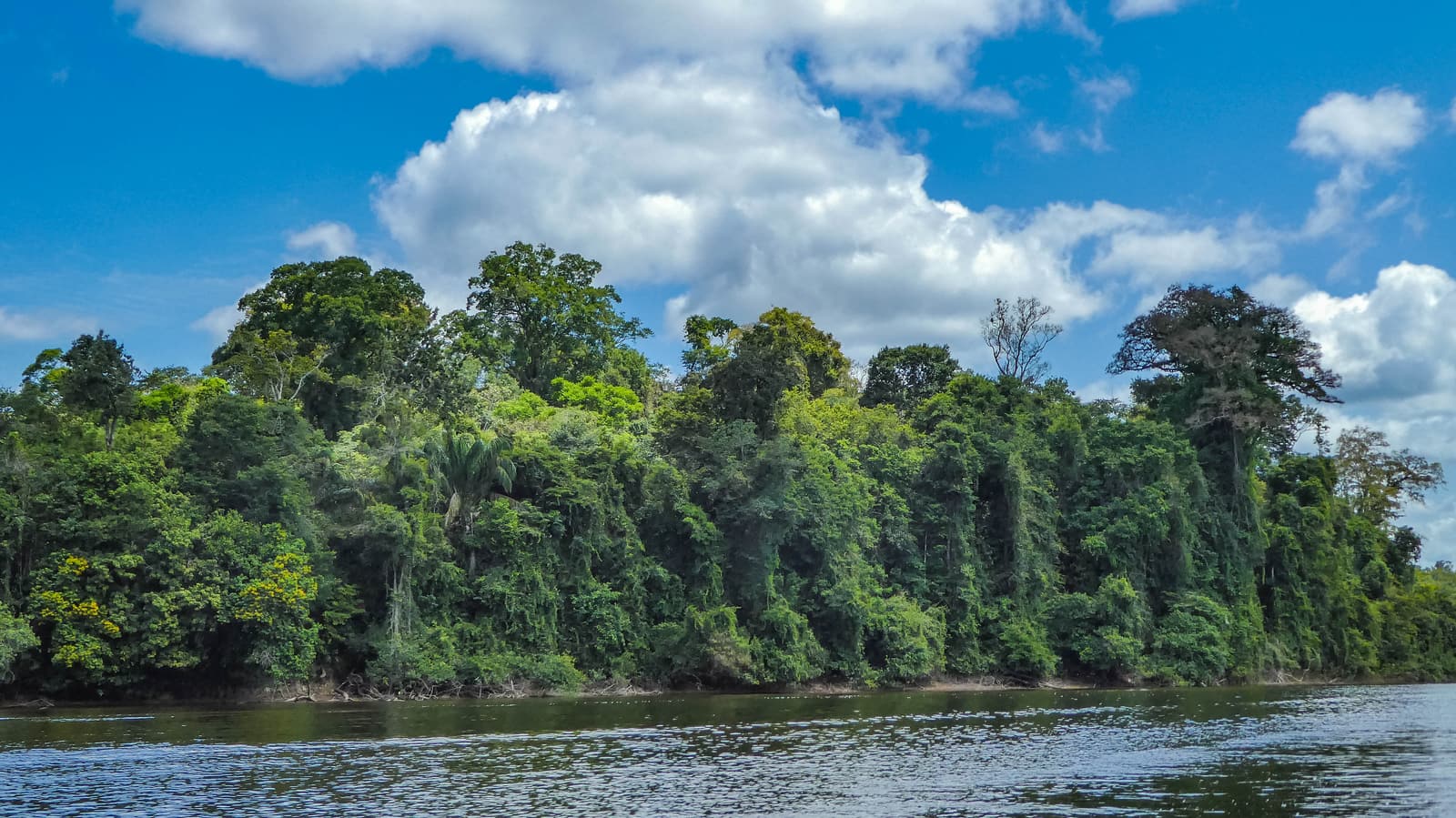
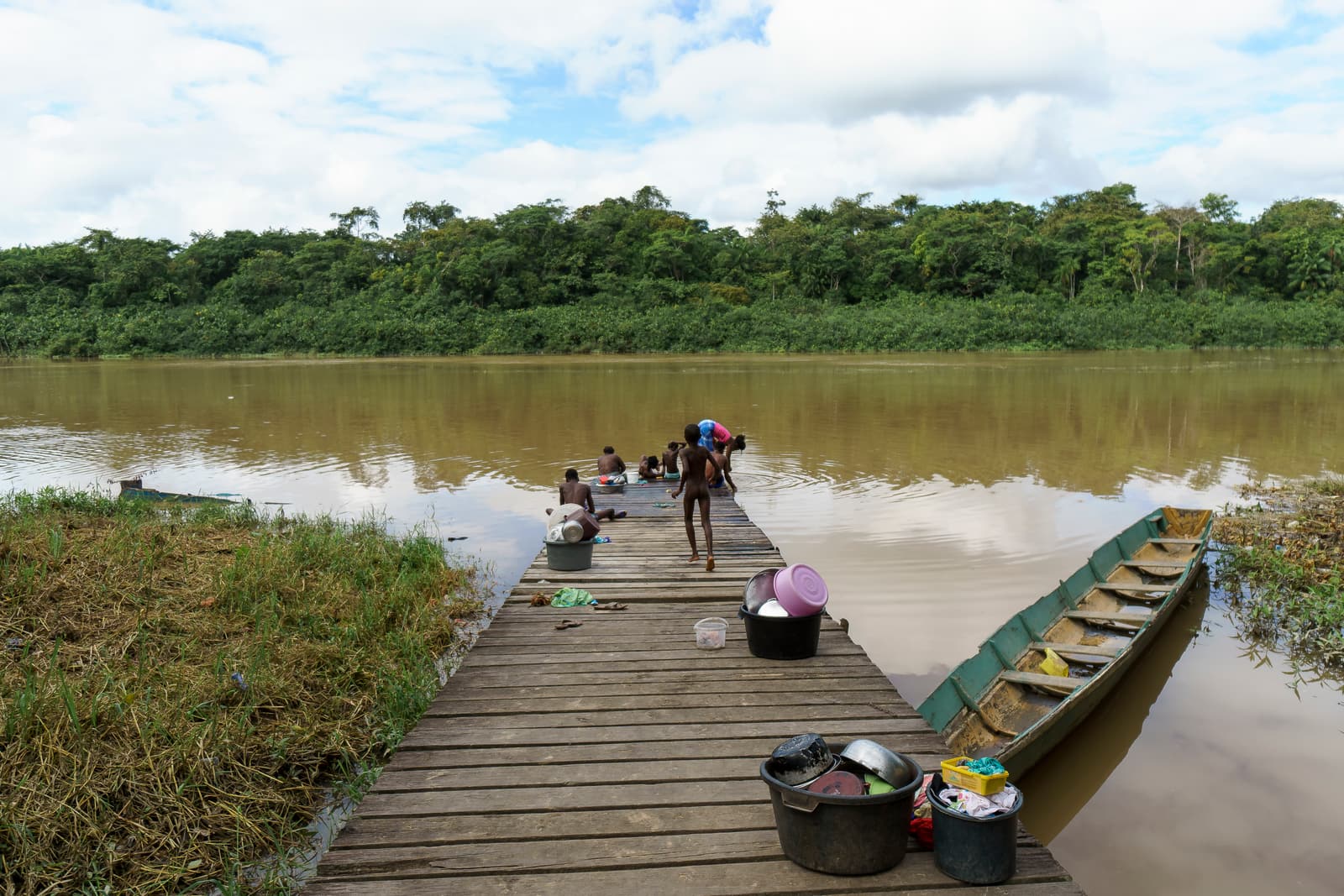
The paved road south from Paramaribo ends after about three hours at Atjoni, a busy landing where long motorised dugouts load passengers, fuel drums and crates of chicken. Beyond it there are no roads at all: the river is the highway to dozens of villages of the Saamaka (Saramaccan) Maroons.
The Maroons are descendants of Africans who escaped from the coastal plantations in the 17th and 18th centuries, fought the colonial army to a standstill and won recognition of their freedom by treaty in the 1760s — a century before abolition. Their languages, religion, woodcarving and village government have been carried on here ever since.
Top things to do: Upper Suriname River
Travel by korjaal
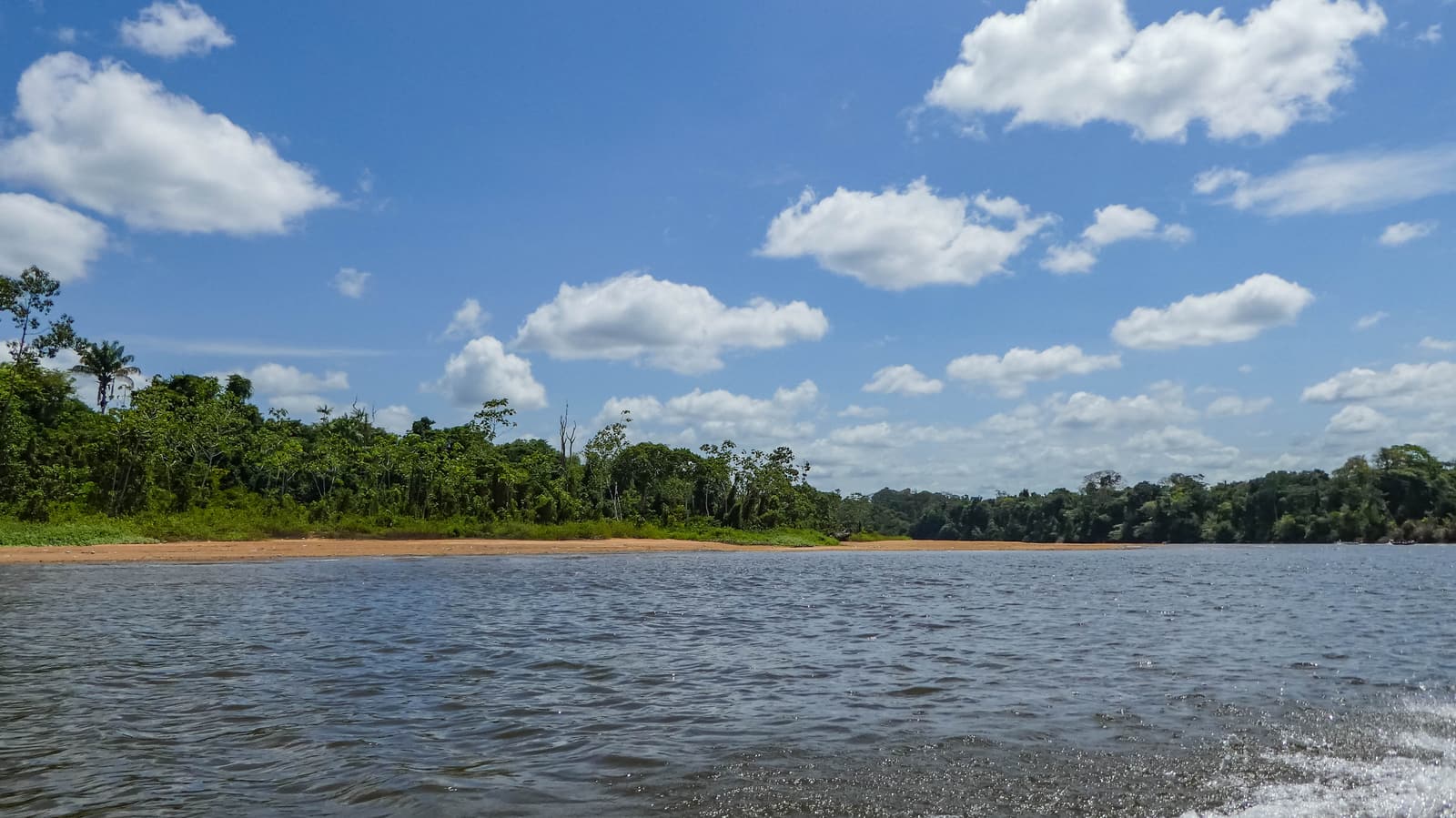
The journey is half the experience: one to several hours in a dugout canoe with an outboard, the boatman reading the current and steering through rapids (sula) that he has known since childhood.
Stay in a river lodge
Simple to comfortable lodges, many of them owned by or run with the neighbouring village, stand on islands and riverbanks along the way. Days are spent swimming in the rapids, walking in the forest with a village guide, visiting cassava plots and looking for caimans by torchlight.
Visit a village — properly
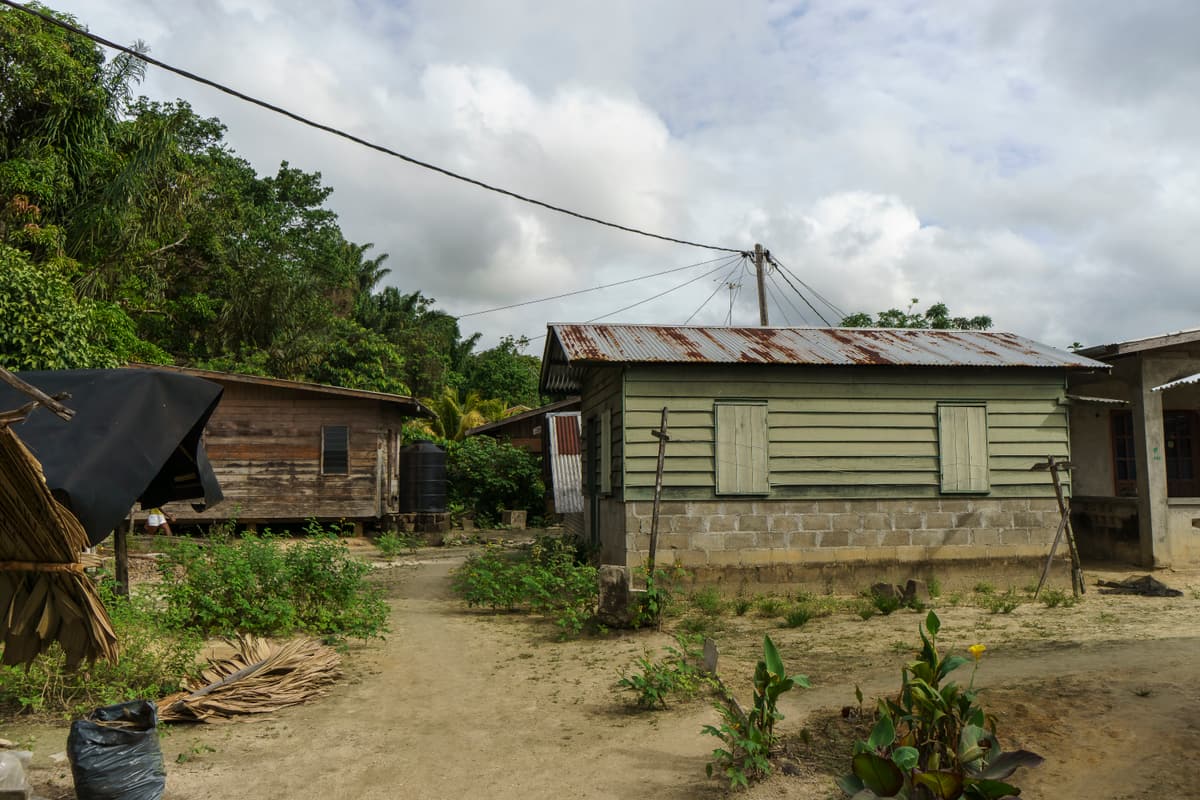
With a local guide you walk through villages of wooden houses with carved doors. In Pikin Slee the Saamaka Museum presents the culture in the community’s own words. You are a guest in someone’s home: dress modestly and follow your guide’s lead.
Rapids and forest
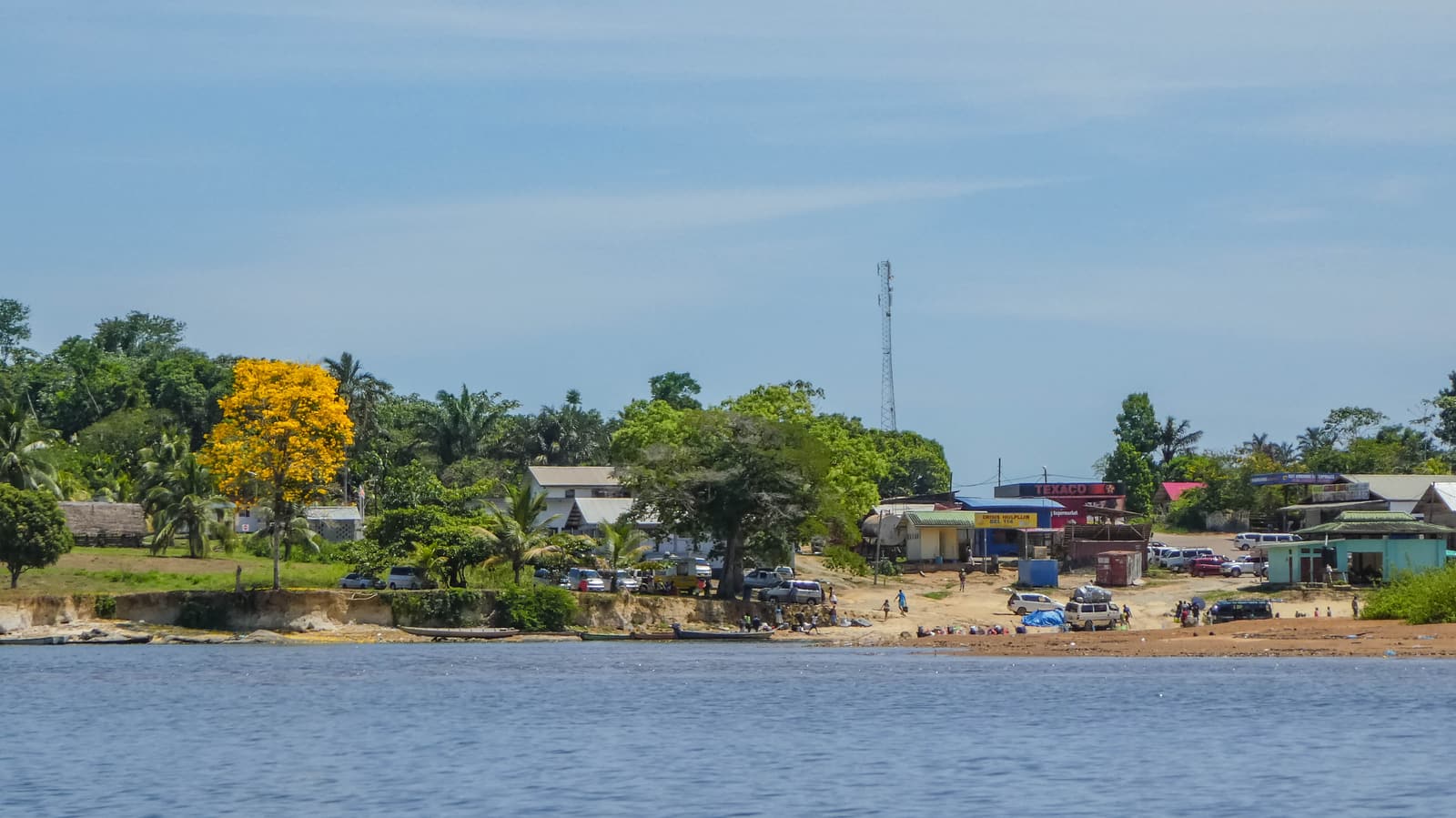
Natural rock pools in the rapids make the best bathing in the country. Forest walks turn up medicinal plants, monkeys, giant kapok trees and more birds than you can name.
How to get to Upper Suriname River
- Road from Paramaribo to Atjoni (about 190 km, roughly three hours) by tour vehicle or public bus, then by boat upstream to your lodge.
- Nearly everyone goes on a package of three to five days that includes transport, boat, lodge, meals and guide. Lodges and local agencies sell these directly.
- On GetYourGuide, the three-day interior tour is the one bookable option of this kind; check its exact route on the listing.
Insider tips
- Always ask before photographing people, houses or shrines. The gate of palm leaves at a village entrance and the faaka tiki shrine are sacred — do not touch them.
- Bring cash, a dry bag, a torch, repellent and a long-sleeved shirt; there are no ATMs past Paramaribo’s outskirts.
- Ask a travel clinic about malaria precautions for the interior.
- In the late dry season the river can be so low that you walk around some rapids. In the rains it is fast and full.
- Electricity and phone signal are limited. That is the idea.
Tours: Upper Suriname River
GetYourGuide lists only a handful of Suriname tours. These are the real, bookable ones most relevant to Upper Suriname River:
Multi-day trip from €796 3-Day Tour of the Suriname Interior, All Inclusive
The only multi-day trip into the Surinamese interior on GetYourGuide. Three days out of Paramaribo with transport, meals and accommodation included: river travel, a village stay, caiman spotting after dark and a try at piranha fishing. Read the day-by-day programme on the listing to see exactly where it goes.
- Transport, meals and accommodation included
- Night-time caiman spotting
- Piranha fishing and village life
 Transfer from €224 per group
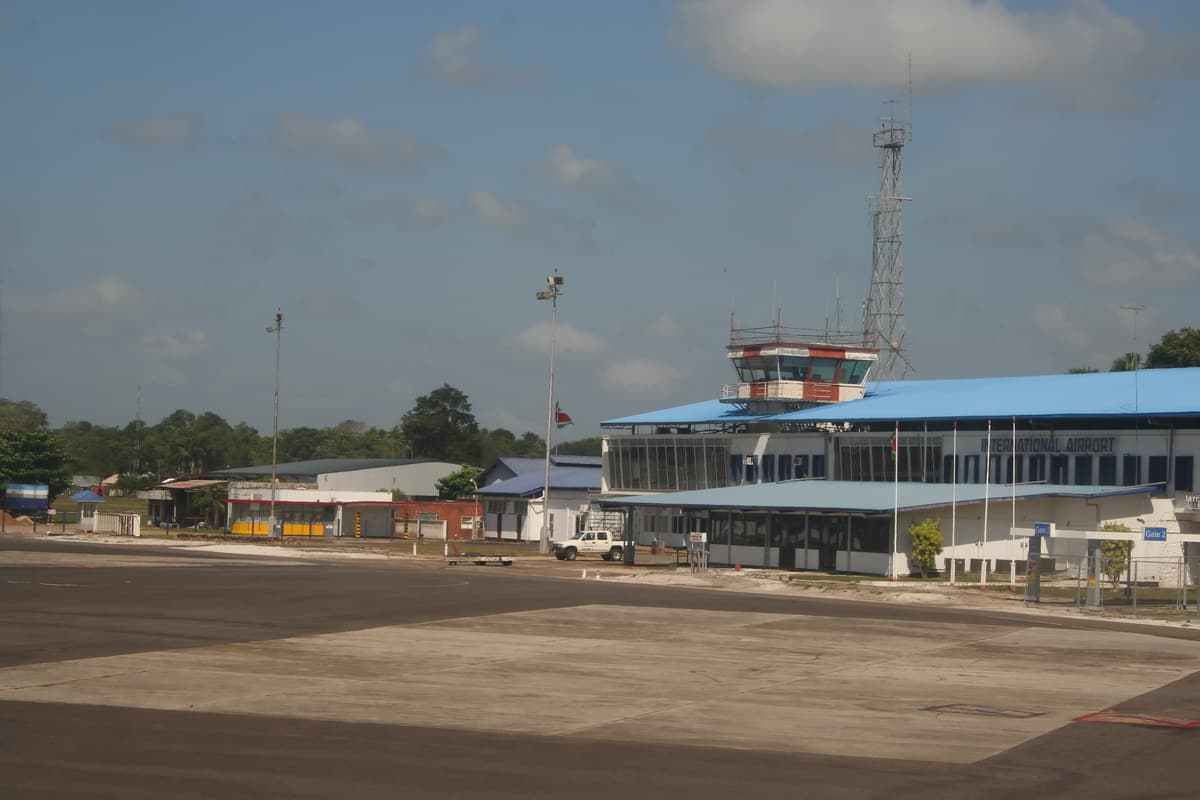
 Paramaribo Airport (PBM): Private Transfer to Paramaribo
A pre-booked private car between Johan Adolf Pengel International Airport at Zanderij and hotels in Paramaribo, in either direction. The airport is about an hour south of the city and many flights land late at night, so a driver waiting with your name is worth a lot. Priced per vehicle — compare with a local taxi or shared shuttle if you are on a budget.
- Air-conditioned private vehicle and driver
- Airport to hotel or hotel to airport
- Priced per vehicle (up to two passengers)