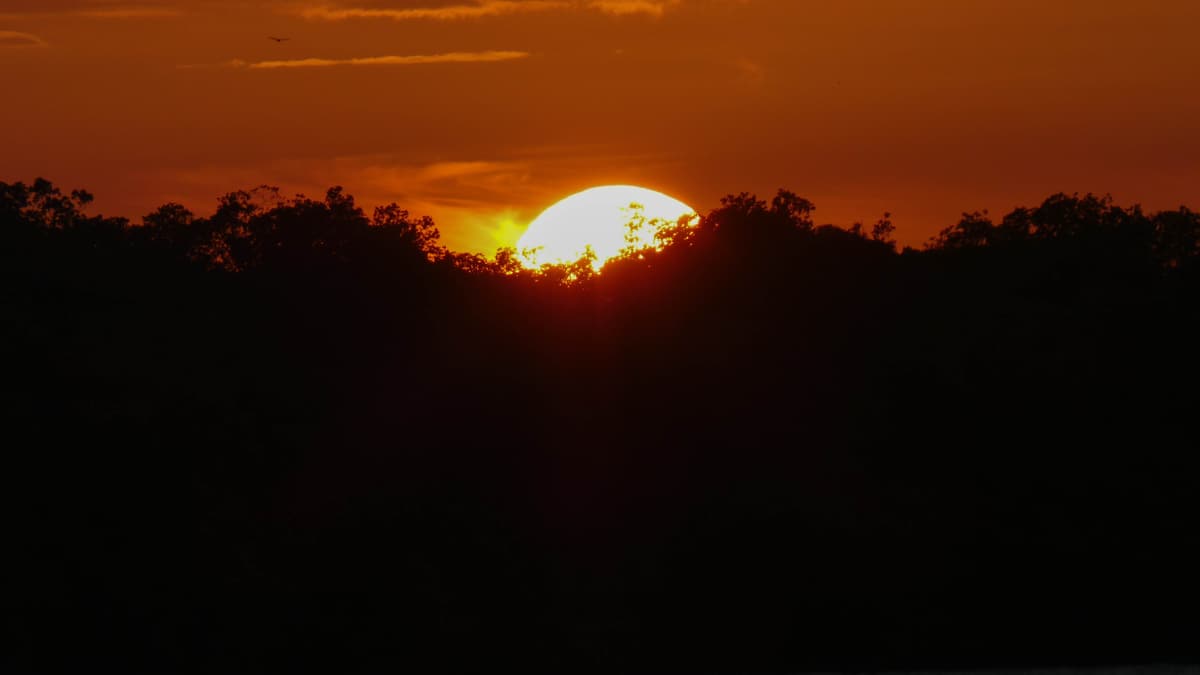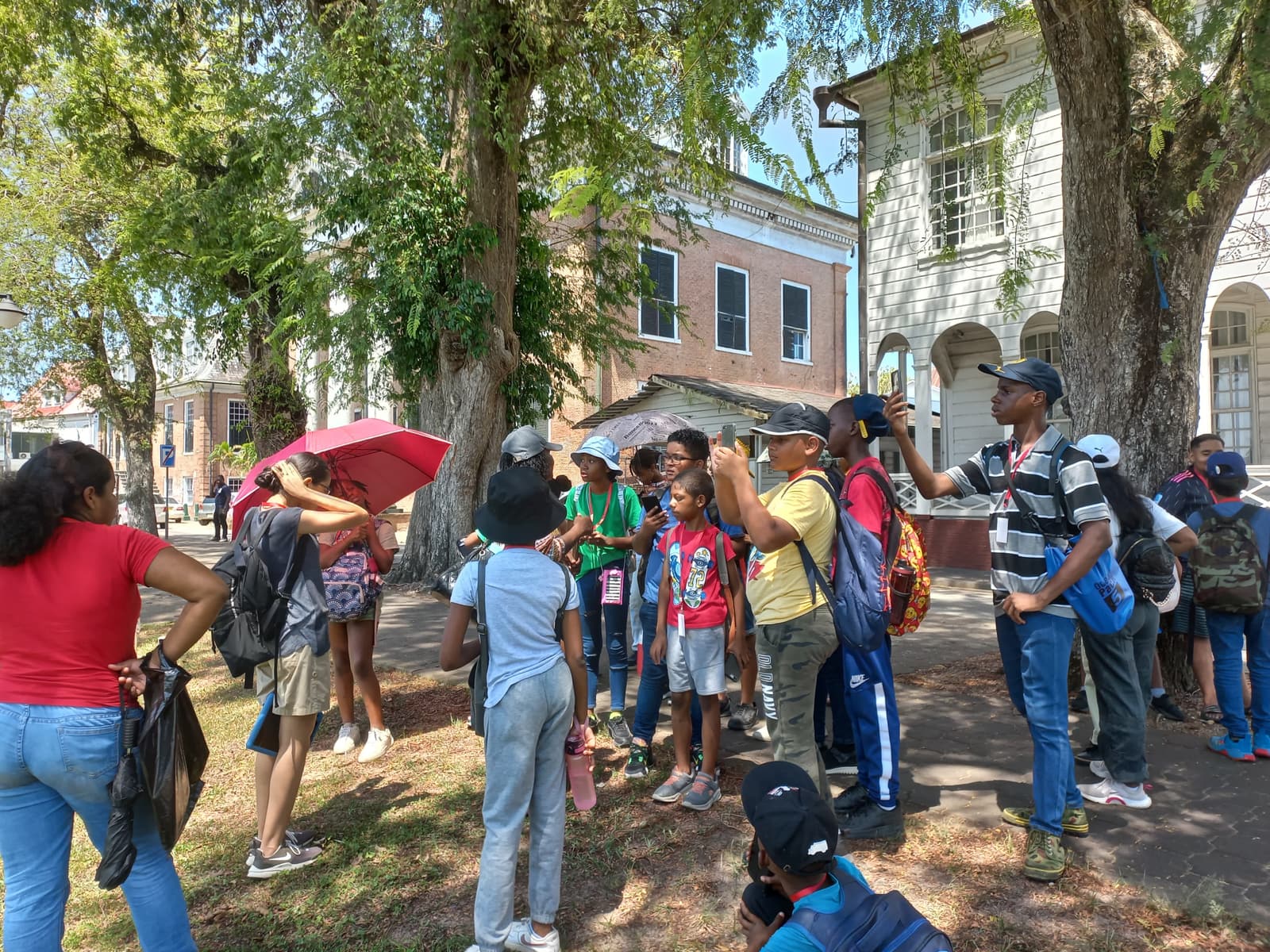
Paramaribo sits on the west bank of the Suriname River, about fifteen kilometres from the Atlantic, and is home to nearly half of the country’s population. It is the smallest, greenest and most easy-going capital on the South American mainland — and the only one where the street signs are in Dutch, the traffic keeps left and Friday prayers, Sunday mass and Hindu festivals are all public events.
A short history
The name comes from an Amerindian village on the river. The English founded a colony here in the 1650s; in 1667 a fleet from the Dutch province of Zeeland under Abraham Crijnssen captured its fort, and the Treaty of Breda that year left Suriname with the Dutch while New Amsterdam — today’s New York — stayed English. For two centuries the colony’s wealth came from sugar, coffee and cocoa plantations worked by enslaved Africans. Many escaped into the forest and founded the free Maroon societies that still live along the interior rivers.
Slavery was abolished in 1863. Contract labourers were then brought from British India and from Java, which is why Suriname today has large Hindustani and Javanese communities alongside Creoles, Maroons, Chinese, Amerindians and others. Great fires in 1821 and 1832 destroyed much of the town; what you see now was rebuilt, in wood, on the old street plan. Suriname became independent on 25 November 1975, and the historic inner city was added to UNESCO’s World Heritage List in 2002.
What to see in the city
- The historic inner city and Waterkant — white timber houses, Independence Square and the Presidential Palace.
- Fort Zeelandia — the 17th-century fort and the Surinaams Museum.
- Saint Peter and Paul Cathedral — a cathedral built entirely of wood.
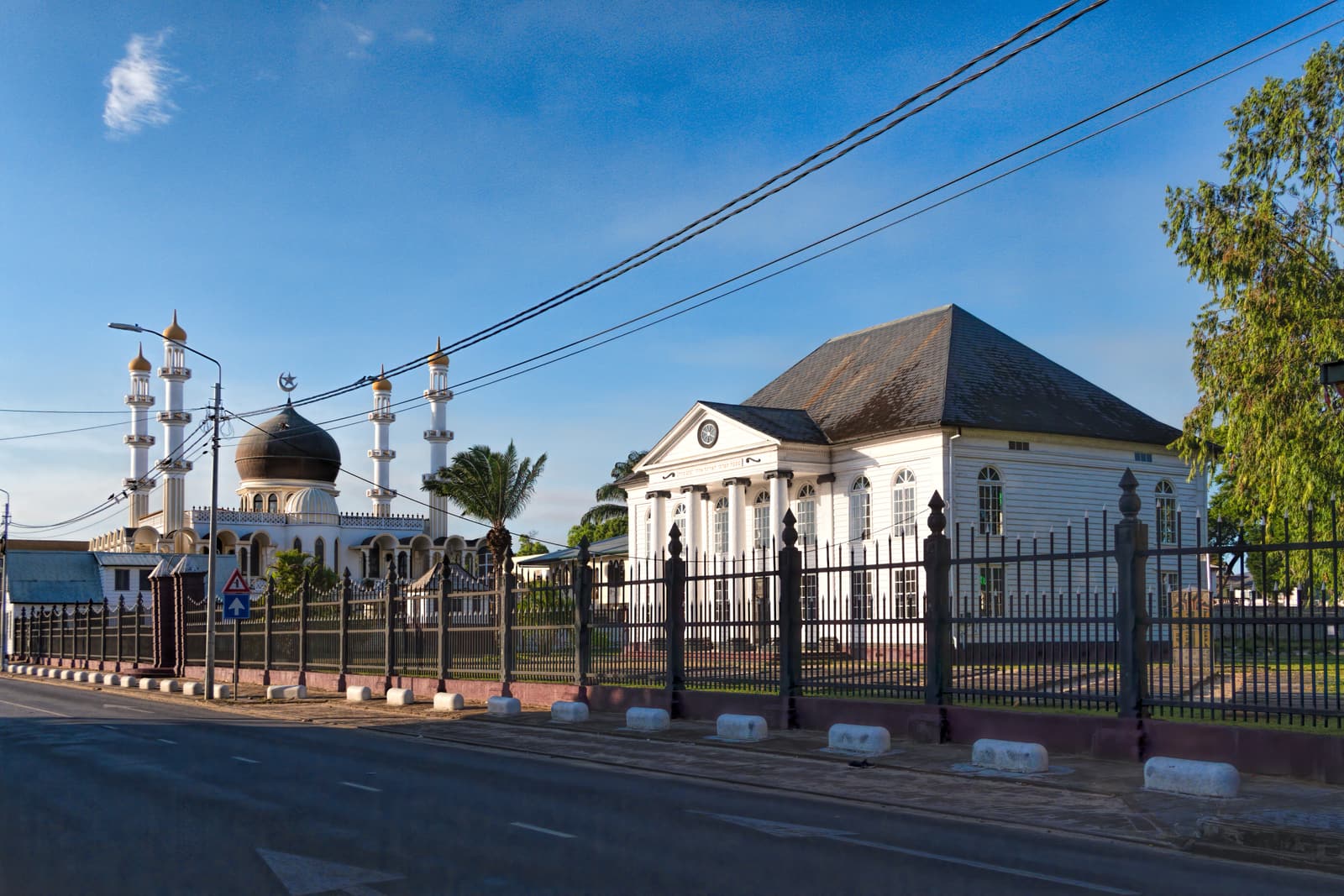
- Keizerstraat — the mosque and the synagogue side by side.
- The Palmentuin — a thousand royal palms behind the palace.
- The Central Market — the country’s larder under one roof.
Beyond the city
Across the river lies Commewijne, the old plantation district: Peperpot Nature Park, Fort Nieuw Amsterdam, Frederiksdorp and Mariënburg, usually explored by bicycle and boat, with river dolphins at the confluence. Further out are Brownsberg and the Brokopondo Reservoir, the Maroon villages of the Upper Suriname River, the Central Suriname Nature Reserve and the turtle beaches of Galibi.
| Trip | Time needed | How it works |
|---|---|---|
| Historic inner city | Half to one day | On foot, alone or with a guide |
| Commewijne plantations | One day | Bicycle and boat, or a guided tour |
| Dolphin sunset boat | 2–3 hours | Boat from Leonsberg |
| Brownsberg & Brokopondo | 1–2 days | Tour or 4×4 from Paramaribo |
| Upper Suriname River | 3–4 days | Road to Atjoni, then dugout to a lodge |
| Galibi (turtle season) | 2 days | Road to Albina, then boat |
| Central Suriname Nature Reserve | 4–5 days | Charter flight, or road and boat |
 Historic Paramaribo
 Historic Inner City & Waterkant
The white wooden capital on the Suriname River
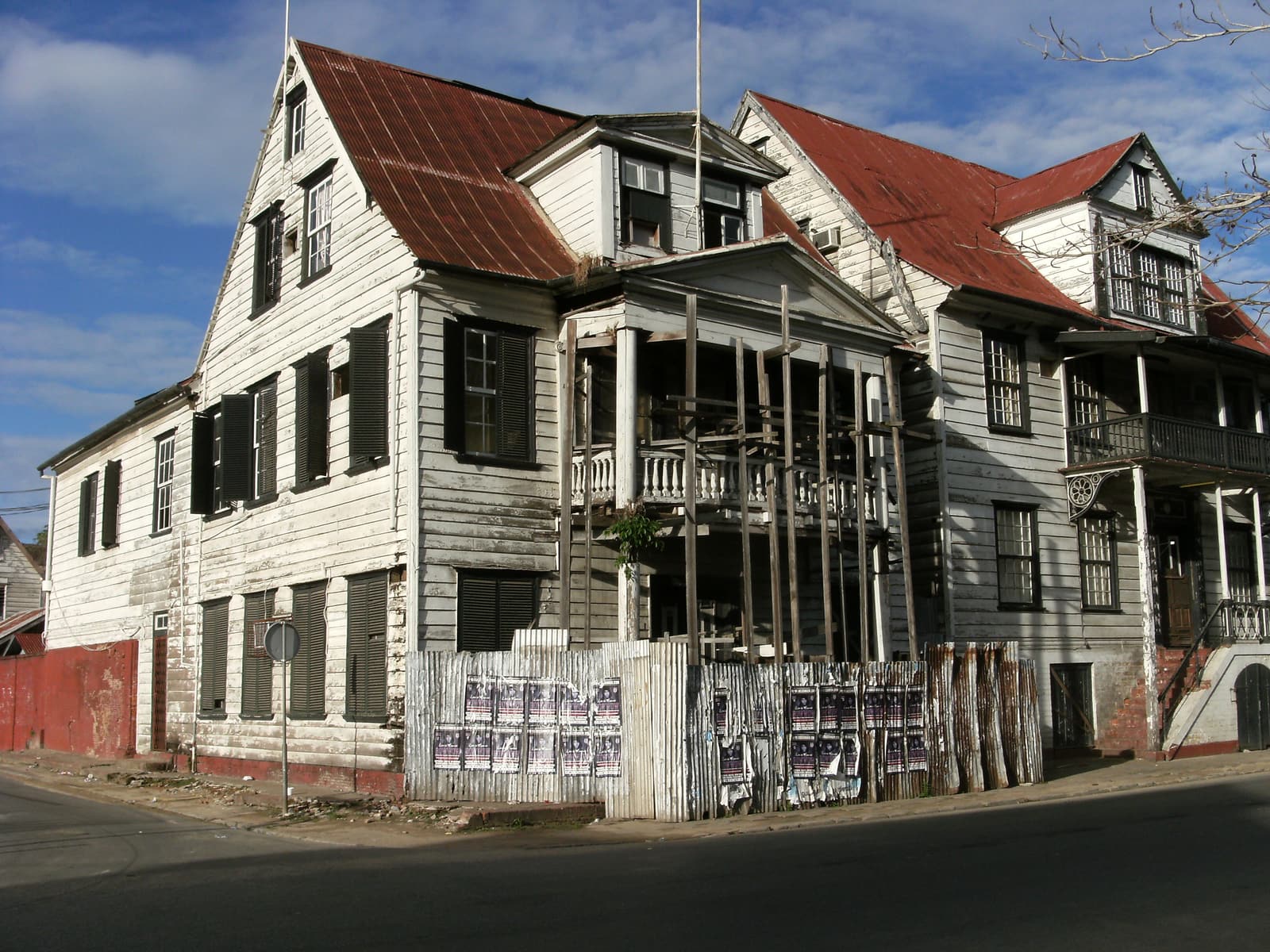
A Dutch colonial town built almost entirely of wood, inscribed by UNESCO in 2002. The riverside Waterkant, Independence Square with the Presidential Palace, and street after street of white houses with green shutters make the best free walk in the Guianas.
 Historic Paramaribo
 Fort Zeelandia
Where Paramaribo began
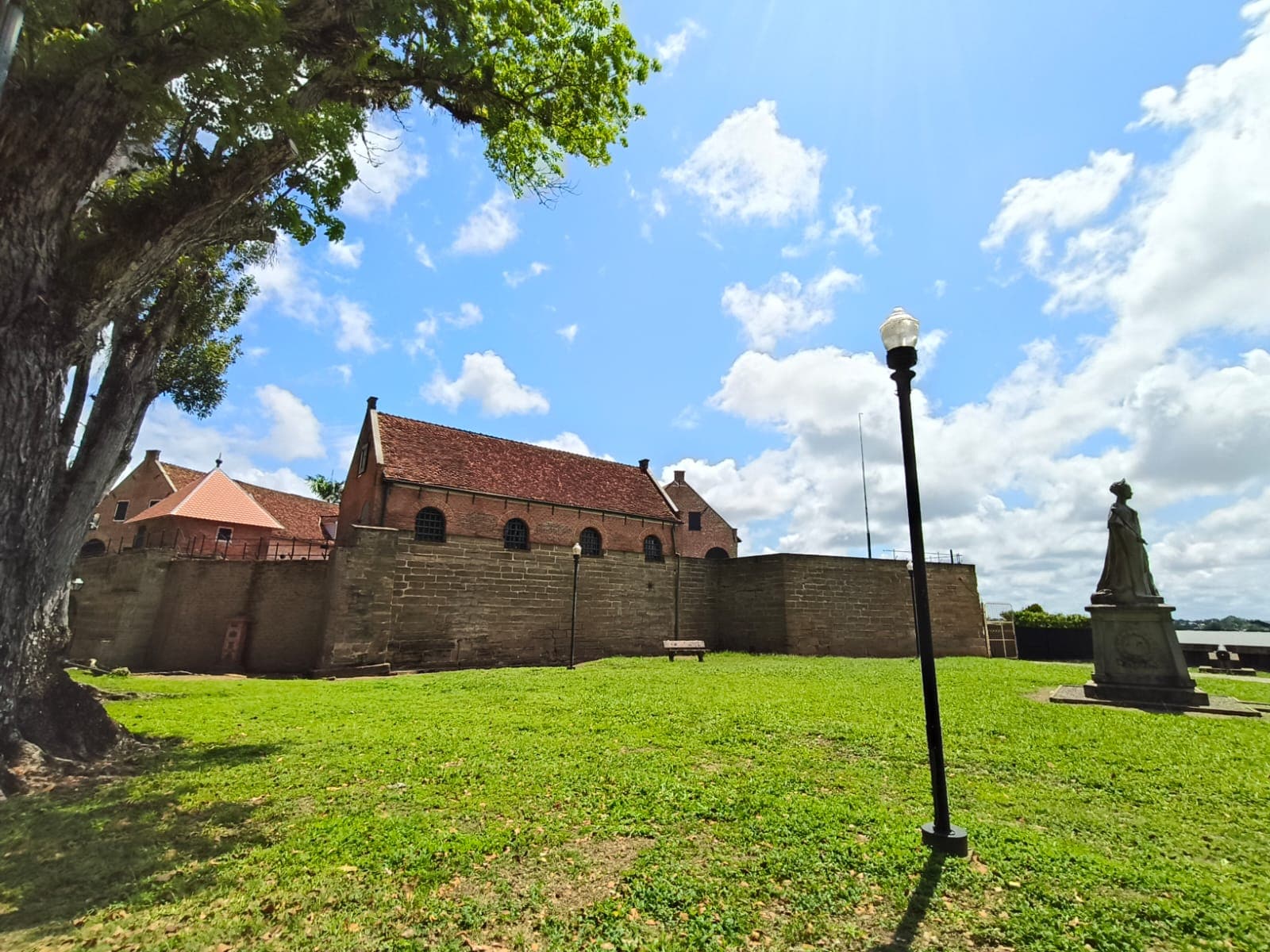
The small pentagonal brick fort on the river bend from which the city grew. Taken by a fleet from Zeeland in 1667, later a barracks and prison, and the scene of the December murders of 1982, it now houses the Surinaams Museum.
 Historic Paramaribo
 Keizerstraat Mosque & Synagogue
Two faiths, one garden wall
On Keizerstraat the Neveh Shalom synagogue and the city’s main mosque stand side by side, sharing a boundary. It is Paramaribo’s most photographed street corner and the shortest explanation of how the city sees itself.
 Commewijne & the river
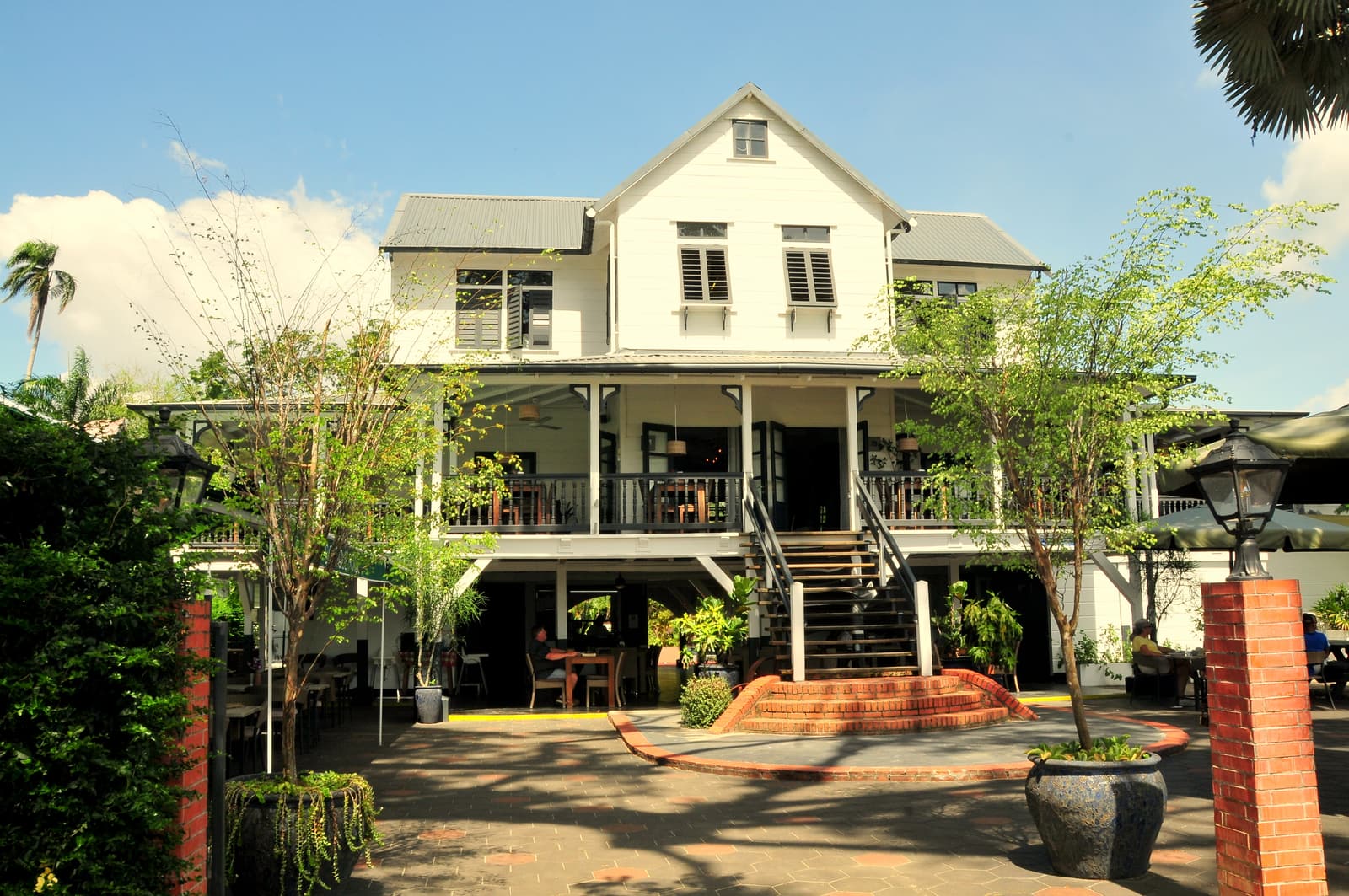
 Peperpot Nature Park
A plantation taken back by the forest
One of Suriname’s oldest plantations, a few kilometres across the river from the city. Coffee and cocoa gave way to secondary forest, and a flat trail now runs past the old buildings through trees full of squirrel monkeys and birds.
Food: three cuisines and more
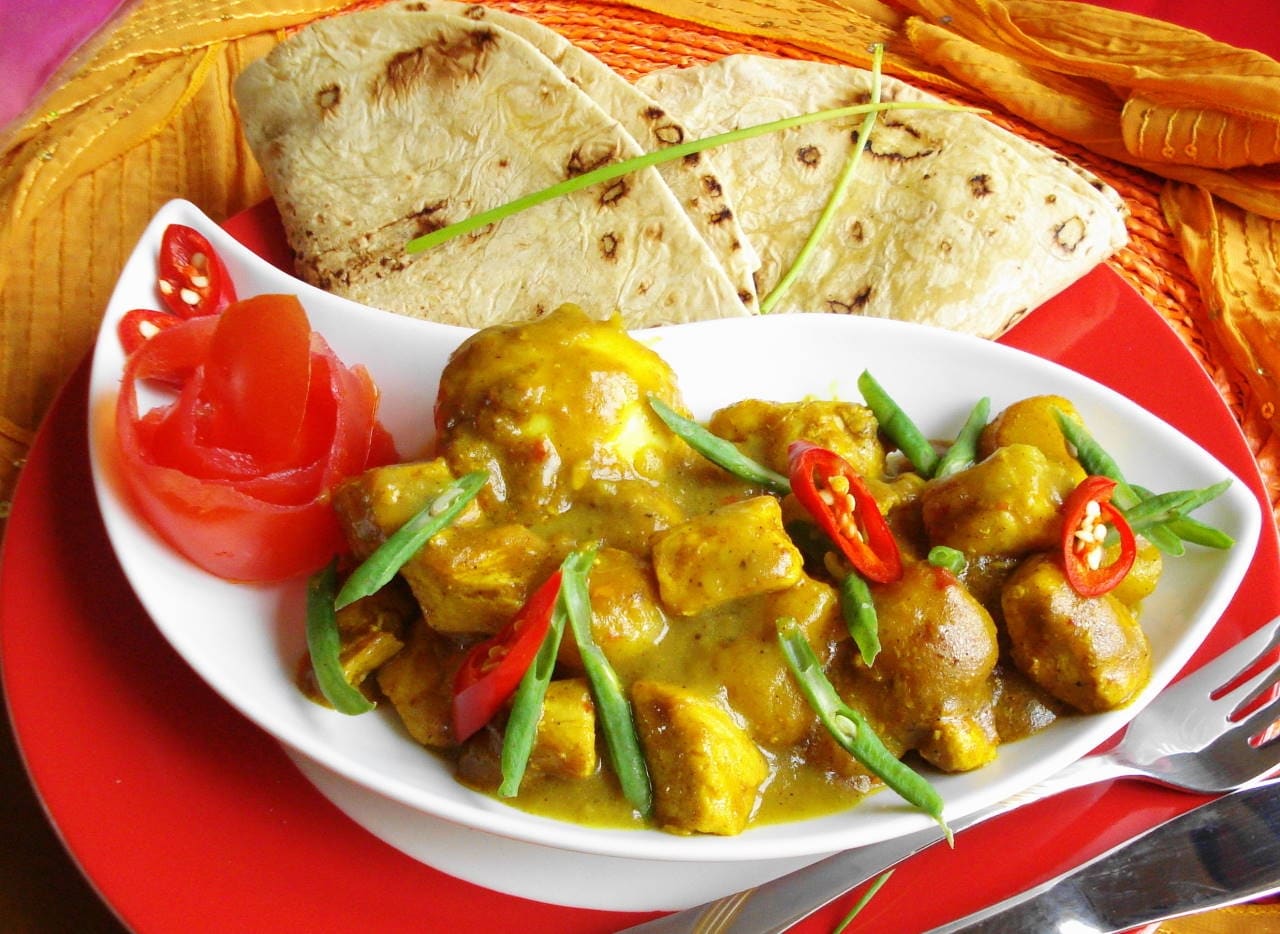
Eating is one of the best reasons to come. Paramaribo’s food is the sum of its people, and it is inexpensive.
- Hindustani. Roti — a soft flatbread served with curried chicken, potato and long beans, eaten with the hands — is the national lunch. Look also for bara, a fried lentil-flour snack.
- Javanese. At a warung you order saoto (an aromatic chicken soup with bean sprouts and egg), bami or nasi (noodles or fried rice) with chicken, satay with peanut sauce, and dawet, a pink coconut drink. The Blauwgrond neighbourhood in the north of the city is a whole street of them.
- Creole. Pom, an oven dish of grated pomtajer root and chicken, is the festive classic; moksi alesi is mixed rice with salted meat or fish; pindasoep is peanut soup with plantain dumplings.
- Also. Chinese noodle houses, cassava bread and smoked fish from the interior, and fried plantain with peanut sauce (bakabana) from street stalls.
The yellow Madame Jeanette pepper is extremely hot — ask for the sambal on the side. The local beer is Parbo, the rum is Borgoe, and fresh juices are sold everywhere. In the evening the riverside stalls on the Waterkant and the terraces around Kleine Waterstraat are the places to sit.
Money
The currency is the Surinamese dollar (SRD). Its exchange rate has moved a great deal in recent years, so prices in this guide are deliberately not given in SRD. Euros and US dollars are easy to change at banks and licensed exchange offices (cambios), and are often accepted directly for tours and hotels. ATMs in the city dispense SRD; cards are accepted in larger hotels and some restaurants, far less in small shops and not at all in the interior. Carry cash for markets, boats and buses.
Language
Dutch is the official language. Sranan Tongo, an English-based creole, is what everyone shares in the street, and English is widely understood in the city. You will also hear Sarnami, Javanese, Chinese and the Maroon and Amerindian languages.
Health and safety
- Paramaribo is a relaxed city, but use normal big-city sense: keep valuables out of sight, avoid the Palmentuin and empty streets after dark, and take a taxi at night rather than walking.
- Yellow fever vaccination is commonly recommended for Suriname, and a certificate is required if you arrive from a risk country. Ask a travel clinic about this and about malaria precautions, which depend on where in the interior you go.
- Dengue and other mosquito-borne infections occur. Use repellent, especially at dawn and dusk.
- The sun is equatorial and the humidity high: hat, sunscreen, water, and sightseeing early or late.
- Tap water in Paramaribo is generally regarded as safe; drink bottled or treated water in the interior.
Practical details
- Time zone: UTC−3 all year.
- Electricity: voltage and sockets are mixed — both European and North American plugs are in use. Bring a universal adapter and check the voltage before plugging in.
- Dress: light cotton, a rain jacket, and long sleeves and trousers for forest evenings. Cover shoulders and knees for the mosque, synagogue and temples.
- Sundays: the centre is very quiet and the Central Market is closed; it is a good day for Commewijne or a morning at Independence Square, where songbird owners hold their singing contests.
- Entry rules: see getting to Paramaribo and always confirm on the official portal.
Sample itineraries
Two days
Day 1: Fort Zeelandia and the Waterkant early, Independence Square and the Palmentuin, the cathedral and Keizerstraat, roti for lunch, the Central Market, then a dolphin boat from Leonsberg at sunset. Day 2: Commewijne by bike and boat — Peperpot, Fort Nieuw Amsterdam and Mariënburg — or the coffee and plantation tour.
Five days
The two days above, then three days on the Upper Suriname River: road to Atjoni, dugout to a river lodge, village visits, rapids and forest walks.
A week or more
Add Brownsberg on the way back from the interior, then either two days at Galibi in turtle season or a four-to-five-day expedition to Raleighvallen in the Central Suriname Nature Reserve.