Almost every visitor arrives at Johan Adolf Pengel International Airport (code PBM), which Surinamers simply call Zanderij after the village beside it. It lies about 45 km south of Paramaribo. The alternatives are the two river crossings from Guyana and French Guiana.
Flying to Paramaribo
The main long-haul route is from Amsterdam, flown non-stop by KLM and Surinam Airways in roughly nine hours. Within the Americas, flights have linked Paramaribo with Miami, Panama City, Port of Spain, Georgetown, Belém, Curaçao and Aruba, among others. Routes and airlines to Suriname change more often than most, so treat any list as a starting point and check current schedules.
A second, small airport inside the city, Zorg en Hoop, handles domestic flights to the interior and some short regional services to Guyana.
From the airport to the city
The drive takes 45 to 60 minutes on a good two-lane road. Many intercontinental flights land in the evening or at night, so decide before you travel:
- Private transfer. A driver meets you in the arrivals hall. This is the simplest option after a long flight and the only one you can book through GetYourGuide — see the tours page. It is priced per vehicle.
- Airport taxi. Taxis wait outside arrivals. There are no meters: agree the fare, and the currency, before you get in. Expect to pay noticeably less than a pre-booked private transfer; check current rates with your hotel.
- Shared shuttle. Several local companies run minibuses between the airport and hotels or home addresses in Paramaribo for a fraction of the taxi fare. They normally need to be reserved a day or more ahead.
- Hotel pickup. Most hotels and guesthouses will arrange a driver for you if you send your flight number.
There is no train and no practical public bus for travellers with luggage.
Journey times at a glance
| Route | How | Typical time |
|---|---|---|
| Airport (PBM) → city centre | Taxi, shuttle or private transfer | 45–60 min |
| Amsterdam → Paramaribo | Non-stop flight | about 9 hours |
| Georgetown → Paramaribo | Road, Corentyne ferry, road | a full day |
| Cayenne → Paramaribo | Road, Marowijne crossing, road | most of a day |
| Albina (border) → Paramaribo | Shared taxi or bus | 2–2.5 hours |
| South Drain (border) → Paramaribo | Shared taxi or bus via Nieuw Nickerie | 4–5 hours |
| Paramaribo → Atjoni | Bus or tour vehicle | about 3 hours |
| Paramaribo → Brownsberg | Tour vehicle or 4×4 | 2–2.5 hours |
Overland from Guyana
The border is the Corentyne River. A vehicle ferry runs between Moleson Creek in Guyana and South Drain in Suriname, normally only once or twice a day, so the whole journey is built around its timetable. From Georgetown you leave before dawn, reach the ferry by mid-morning, clear two sets of immigration and continue through the rice country of Nickerie to Paramaribo, arriving in the evening. Shared minibuses sell the trip door to door; one such service is bookable on GetYourGuide and appears on our tours page. Do not use the unofficial “backtrack” boats: you will have no entry stamp.
Overland from French Guiana
From Cayenne or Kourou, shared taxis and buses run to Saint-Laurent-du-Maroni. There you are stamped out of France, cross the Marowijne (Maroni) River to Albina by ferry or motorised canoe, and are stamped into Suriname. From Albina a paved road leads to Paramaribo in two to two and a half hours by shared taxi or bus. Remember that French Guiana is part of France: check whether your passport needs a visa for it, which is a separate question from Suriname.
Entry formalities
Suriname has changed its entry system several times. At the time of writing, travellers of many nationalities do not need a visa but must pay an entry fee online before departure and carry the receipt; other nationalities need an e-visa or a visa. An online immigration form may also be requested. Airlines check the paperwork at check-in. Because the rules, the fee and the website have all changed in the past, confirm the current requirements on Suriname’s official e-visa portal or with an embassy before you book — and again before you fly. A yellow fever certificate is required if you arrive from a country with risk of transmission.
Getting around Paramaribo
- On foot. The historic centre is flat and compact: Fort Zeelandia, the Palmentuin, Independence Square, the cathedral and Keizerstraat are all within twenty minutes’ walk of each other.
- Taxis. Cheap and plentiful, without meters. Ask your hotel to call one and agree the price first, especially at night.
- Buses. Privately owned minibuses, hand-painted with portraits and slogans, run fixed routes from the centre and leave when full. They are very cheap and an experience in themselves, but slow.
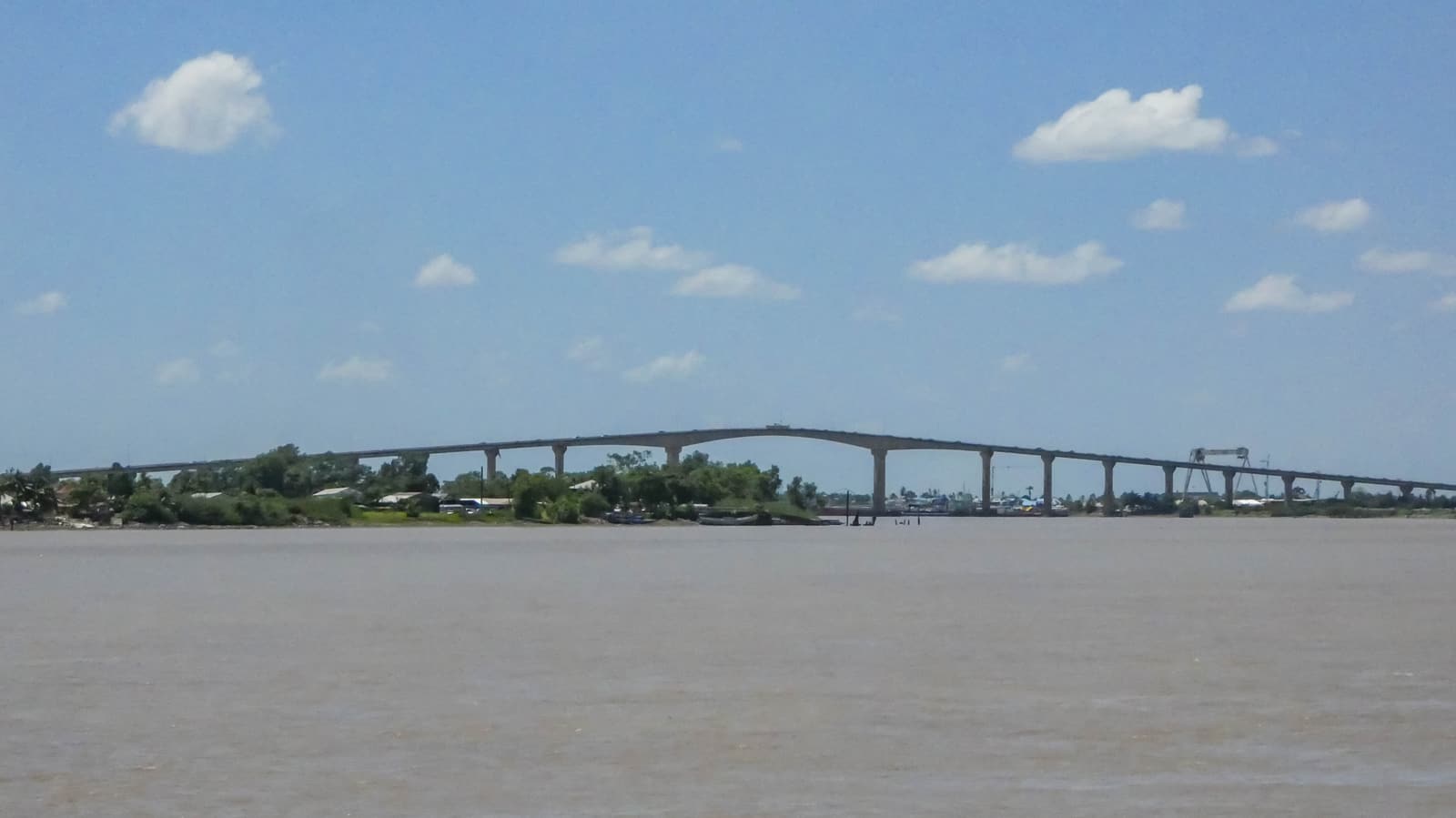
- Bicycle. The classic way to see Commewijne. Rental shops in the centre supply bikes and route maps; small boats carry you and the bike across the river, because cyclists are not allowed on the Jules Wijdenbosch Bridge.
- Car hire. Possible, and useful for Commewijne or Brownsweg. Suriname drives on the left.
Getting into the interior
Paved roads run east to Albina, west to Nickerie and south to Atjoni, the jetty at the end of the road for the Upper Suriname River. Beyond that, travel is by motorised dugout or by small aircraft from Zorg en Hoop. Almost everyone visits the interior on an organised trip that includes transport, boat, lodging and meals.